
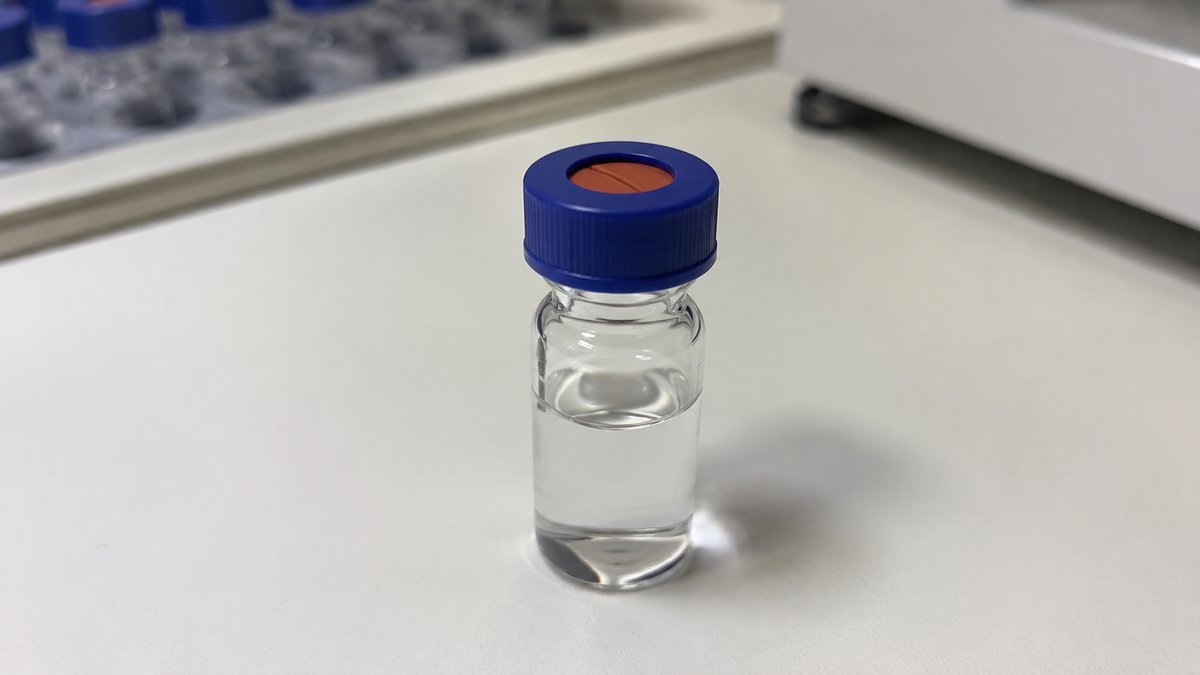
In High-Performance Liquid Chromatography (HPLC) and Ultra-High Performance Liquid Chromatography (UHPLC) analysis, Large Volume Injection (LVI) techniques are increasingly applied to meet the growing demands for high-sensitivity detection and trace analysis of minute samples. However, when a single injection volume accounts for a high proportion of the vial’s effective headspace volume—such as injecting 100 µL to 500 µL from a 2 mL sample vial—phenomena like deteriorated injection repeatability and abnormally decreased peak areas are frequently encountered. The root cause often lies in the non-negligible negative pressure generated inside the sample vial during the sampling process.
This article analyzes the mechanisms of negative pressure formation in 2 mL sample vials from fluid dynamics and physicochemical perspectives, evaluates its impact on analytical results, and provides systematic preventative measures and operational guidelines.
1. Mechanism of Negative Pressure Formation Inside Sample Vials
In a closed system, the total internal pressure of a 2 mL sample vial consists of the partial pressure of remaining gases and the saturated vapor pressure of the solvent :
When the autosampler needle pierces the septum to draw the sample, the system equilibrium is disrupted. The process of negative pressure generation involves the following physicochemical mechanisms:
1.1 Volume Displacement and Sudden Pressure Drop Caused by Liquid Aspiration
According to the ideal gas law (), under constant temperature and gas molar amount, gas pressure is inversely proportional to volume.
- When a 2 mL standard sample vial is filled with 1.5 mL of sample, the initial headspace volume is approximately 0.5 mL (500 µL).
- When the needle draws an injection volume at once, assuming a fully sealed septum with no external gas replenishment, the headspace volume instantaneously expands to .
- Without accounting for vapor replenishment, the headspace gas pressure drops to approximately 71.4% of its initial value, creating a negative pressure differential of about 28.6 kPa (0.286 bar) inside the vial. Larger injection volumes lead to greater relative changes in headspace volume and more pronounced negative pressure.
1.2 Solvent Vapor Pressure and Phase Equilibrium Lag
After liquid withdrawal, the system tends to replenish headspace pressure through solvent evaporation. However, the evaporation rate from liquid to gas phase is limited by diffusion coefficients and surface area, making it impossible to reach a new gas-liquid equilibrium within the short timeframe of needle aspiration (typically a few seconds).
- For solvents with low vapor pressure (e.g., water, acetonitrile/water mixtures), pressure replenishment via evaporation is extremely weak, resulting in prolonged negative pressure duration.
- For highly volatile solvents with high vapor pressure (e.g., dichloromethane, methanol), although vapor replenishment occurs faster, rapid evaporation absorbs heat, causing localized cooling.
1.3 Temperature Variations and Thermal Expansion/Contraction of Gases
According to Charles’s Law, gas pressure is directly proportional to absolute thermodynamic temperature. If a sample is taken directly from a low-temperature environment (such as a 4°C sample tray) or undergoes temperature fluctuations during sampling, the temperature change directly impacts internal vial pressure:
When the sample cools down, gas contraction and vapor condensation further compound the negative pressure effect caused by liquid aspiration.
1.4 Septum Elasticity and Sealing Characteristics
High-elasticity septa (such as pure silicone or PTFE/silicone composites) form a tight dynamic seal around the needle hole upon puncture due to the elastic deformation of polymer materials. While this excellent self-sealing ability prevents solvent evaporation, it completely isolates the interior from external air entry, preventing the negative pressure created by aspiration from being equalized.
2. Impact of Negative Pressure on Chromatographic Analysis Results
The negative pressure formed inside the sample vial directly disrupts the pressure balance of the autosampler’s fluidic system, causing a series of analytical discrepancies:
2.1 Inaccurate Injection Volume and Poor Repeatability (Increased RSD)
The metering precision of autosamplers (such as metering pump/sample loop systems) relies on the premise that the internal pressure of the sample vial equals atmospheric pressure. When negative pressure exists inside the vial, the resistance against the metering pump plunger during backward withdrawal increases. If the suction power of the pump is insufficient to overcome the “hydrostatic pressure head + internal negative pressure”, the actual volume drawn into the sample loop will fall below the set point. This directly causes decreased peak area responses and significantly degrades repeatability (relative standard deviation, RSD) among parallel samples.
2.2 Solvent Degassing and Bubble Formation
According to Henry’s Law, the solubility of a gas in a liquid is directly proportional to the partial pressure of that gas above the liquid surface. Negative pressure inside the vial causes dissolved air (primarily nitrogen and oxygen) in the sample solvent to become supersaturated and outgas, forming microbubbles.
- If microbubbles enter the sample loop with the sample, they displace liquid volume, resulting in missed injection volume.
- If microbubbles enter the mobile phase flow path, they may cause column pressure fluctuations or increased detector baseline noise.
2.3 Selective Volatilization and Sample Concentration Effects
Negative pressure lowers the total pressure above the liquid surface, accelerating the evaporation of low-boiling volatile components into the headspace. For samples containing volatile organic compounds (VOCs) or low-boiling solvents, prolonged exposure to negative pressure leads to matrix concentration or shifts in component ratios, impairing qualitative and quantitative accuracy.
3. Prevention and Control Strategies for Negative Pressure Under Large Volume Injection
To maintain internal pressure stability during large volume injections, optimizations must be implemented across septum selection, mechanical sealing torque, and temperature control.
3.1 Application of Pre-slit Septa
For large volume injection applications, pre-slit septa offer the most direct and effective physical solution.
- Mechanism: The septum features a pre-cut single-slit or cross-slit (starburst) micro-incision introduced during manufacturing. When the injection needle pierces and draws liquid, the micro-slit opens slightly under the pressure differential, allowing a minute amount of air to balance the internal pressure. Upon needle withdrawal, the septum closes via material elasticity, preventing substantial solvent evaporation.
- Recommendations: For large volume injections (> 100 µL) or continuous multiple-puncture sampling, cross-slit PTFE/silicone septa should be prioritized.
3.2 Septum Material Optimization
The hardness, elasticity, and recovery rate of different materials significantly influence negative pressure formation and release.
- Shore A Hardness Control: Select soft silicone with a hardness of 45°–50° Shore A as the core elastomer layer. Lower hardness reduces over-tight needle hole closure, allowing ultra-trace micro-venting to alleviate severe negative pressure.
- PTFE Layer Thickness: PTFE film thickness should be controlled between 0.05–0.10 mm. An excessively thick PTFE layer increases penetration resistance and eliminates necessary micro-permeability.
3.3 Vial Cap Tightening Torque Control
Over-tightening screw caps causes severe septum deformation and compression. This not only increases needle penetration resistance but also seals the microscopic air channels between polymer chains, compounding negative pressure.
- Recommended Torque: When using screw caps, recommended torque should be controlled at 0.25–0.35 N·m.
- Assessment Standard: After capping, the septum should remain flat without visually detectable downward bulging or upward arching deformation. For crimp top vials, use a calibrated crimper to ensure smooth, uniform aluminum cap edges without septum rotation.
3.4 Temperature Equilibration Strategy
Avoid taking refrigerated samples (e.g., 4°C) directly out for immediate vial filling and large volume injection.
- Pre-equilibration Time: After filling, sample vials should be pre-equilibrated in the autosampler tray (or temperature-controlled sample compartment) for at least 15–20 minutes to reach the set temperature before initiating the sequence.
- Temperature-Controlled Trays: If the autosampler features temperature control, maintaining a constant tray temperature (e.g., 15°C or 25°C) eliminates additive negative pressure caused by cooling.
4. Performance Comparison of Septa Types Under Negative Pressure Scenarios
A comparison of physical properties and suitability for common laboratory septum materials under large volume injection and negative pressure scenarios is summarized below:
| Physical & Chemical Properties | PTFE / Silicone | Pure Silicone | PTFE / Red Rubber |
|---|---|---|---|
| Shore A Hardness | 45° – 55° | 35° – 45° | 60° – 70° |
| Penetration Force Required | Moderate | Low | Higher |
| Resealability | Excellent | Superior | Fair |
| Negative Pressure Accumulation | High (without pre-slit) | Extremely High | Moderate (prone to leakage via micro-gaps) |
| Sample Compatibility | Excellent (resistant to strong acids/bases & organic solvents) | Fair (prone to swelling by non-polar solvents) | Poor (risk of rubber extractables/leachables) |
| Pre-slit Availability | Widely available (Recommended) | Rarely available | Extremely rare |
| Recommended Application | Primary choice for LVI (must be pre-slit) | Single micro-injection only | Routine analysis (not recommended for LVI) |
Related Resources from hplcvials.com:
- Product: 9mm Short Thread Screw Caps and Septa, Pre-Slit, Bonded, and Made of PTFE/Silicone
- Guide: Pre-Slit Vial Cap vs. Solid Cap: Which is Better for Your Lab?
- Guide: How to Choose the Right HPLC Vial Septa for Your Samples
- Guide: How Much Endure the Internal and External Pressure Can HPLC Vials Withstand?
Comparative Conclusions:
- PTFE/Red Rubber Septa exhibit high hardness and poor elastic recovery. Although they are less prone to extreme negative pressure build-up over multiple punctures (due to incomplete hole closure), their high leachables content and poor chemical resistance fail high-precision analytical standards.
- Pure Silicone Septa are extremely soft with superior self-sealing capacity, leading to the most severe negative pressure accumulation. They are also prone to swelling in organic solvents and are not recommended for LVI.
- PTFE/Silicone (Pre-slit) Septa combine high chemical inertness with robust pressure equalization capabilities, representing the optimal technical solution for addressing negative pressure issues in large volume injection.
5. Practical Operating Guidelines and Common Pitfalls
5.1 Standard Operating Procedures (SOP) for Laboratories
- Limit Maximum Injection Volume Ratio:
For a 2 mL sample vial (standard fill volume 1.5 mL), single injection volume should ideally be kept ≤ 100 µL. If injections of 200–500 µL are required, pre-slit PTFE/silicone septa must be used. - Control Vial Sample Fill Volume:
Adequate headspace must be maintained inside the vial. The actual fill volume of a 2 mL vial should never exceed 1.5 mL (maintaining at least 0.5–0.8 mL of headspace gas space). A larger initial headspace cushions volume change ratios during aspiration, dampening the pressure drop magnitude. - Set Reasonable Draw Speeds:
Lower the autosampler draw speed in the chromatography data system (CDS). For example, reduce default speeds from 10 µL/s down to 2–5 µL/s. A slower draw speed gives solvent evaporation extra time to replenish air pressure, mitigating peak instantaneous negative pressure. - Calibrate Needle Penetration Depth:
Ensure proper needle penetration depth. Avoid positioning the needle too deep where it bottoms out against the vial floor, which causes a pseudo “high negative pressure” suction phenomenon due to tip blockage.
5.2 Common Pitfall Troubleshooting
- Pitfall 1: Over-tightening caps to prevent solvent evaporation
- Fact: Excessive torque severely distorts the septum, leading to coring/shedding that clogs the needle while locking down the seal so that negative pressure cannot be relieved.
- Pitfall 2: Manually puncturing non-slit septa with a syringe needle as a substitute
- Fact: Irregular manual punctures tear easily along the edges, causing rapid solvent evaporation to dryness. The resulting silicone particles can easily clog HPLC columns and injection valves; this practice should be strictly prohibited.
- Pitfall 3: Assuming lower peak areas in LVI stem solely from sample loop leaks
- Fact: Before ruling out hardware leaks, vial negative pressure should be checked first. Loosen the sample vial cap by half a turn and re-inject. If peak areas return to normal, the issue can be diagnosed as sample vial negative pressure.